Revolutionizing the Indian Denim Industry: The Strategic Case for Codefree Spray Robots

Revolutionizing the Indian Denim Industry: The Strategic Case for Codefree Spray Robots

The Indian denim industry is at a historic crossroads. As of 2025, India has solidified its position as the fastest-growing regional denim market in Asia Pacific, with a projected revenue of US$ 3.86 billion by 2030 and a CAGR of 8.1%. From the massive fabric hubs of Ahmedabad to the high-end garment clusters of Bangalore and Delhi NCR, the industry is shifting from volume-driven production to sustainability-driven innovation.

For forward-thinking factory owners, the question is no longer if you should automate, but how fast you can implement Codefree Spray Robots.

1. Why India? The Geographical Advantage for Automation

India's denim production is concentrated in specific clusters that are uniquely positioned to benefit from robotic spray technology:

Ahmedabad (The Textile Core): As home to giants like Arvind Ltd, this region requires high-speed, high-consistency solutions to maintain global competitiveness.

Bangalore & Delhi NCR (The Export Hubs): These regions serve premium international brands (Levi’s, H&M, Zara) that demand strict compliance with ZDHC (Zero Discharge of Hazardous Chemicals) and worker safety standards.

Mumbai/Thane (The Quality Center): Where high-end finishing defines the value of the product.

Industrial Distribution of Indian Denim

2. The Power of Codefree Spray Robots: Data-Driven Benefits

The transition from manual Potassium Permanganate (PP) spraying to Codefree Spray Robots is not just an environmental choice—it is a financial one.

A. Unmatched Resource Efficiency

Traditional wet processing is responsible for significant environmental footprints. Codefree technology, integrated with robotic precision, offers:

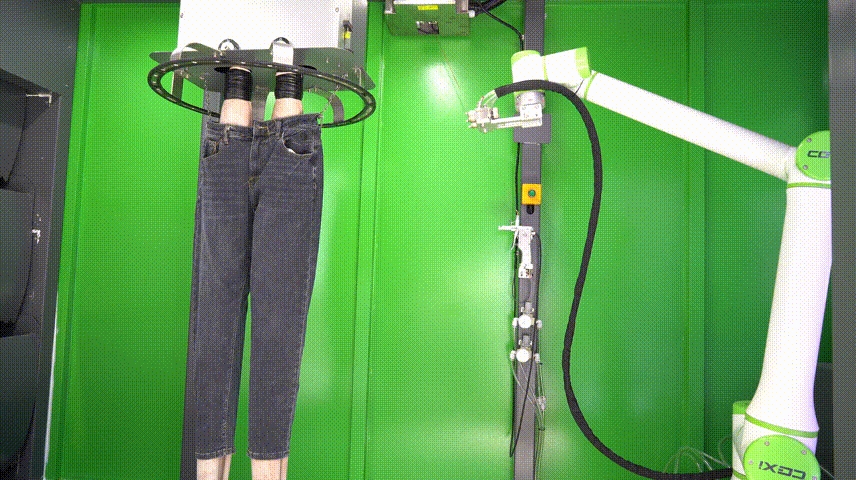
40% Reduction in Chemical Consumption: Robots apply the exact amount of eco-enzymes needed, eliminating the "overspray" common with manual labor.

95% Water Savings: By replacing traditional washing cycles with nanobubble or robotic spray technology, factories can drastically reduce their effluent treatment costs.

B. Precision and Throughput

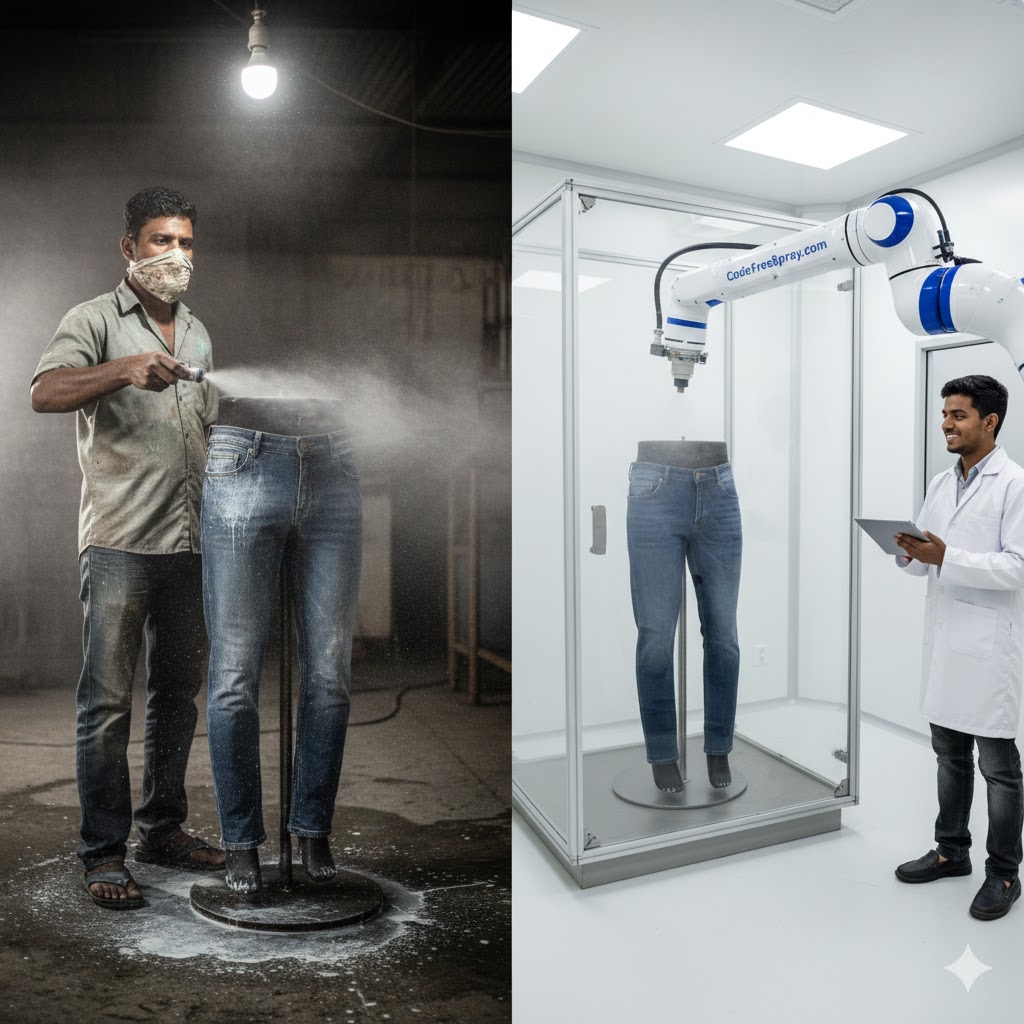
Manual spraying is prone to human error, leading to high rejection rates and inconsistent "whisker" effects.

Consistency: A robot delivers the 1,000th garment with the exact same precision as the 1st.

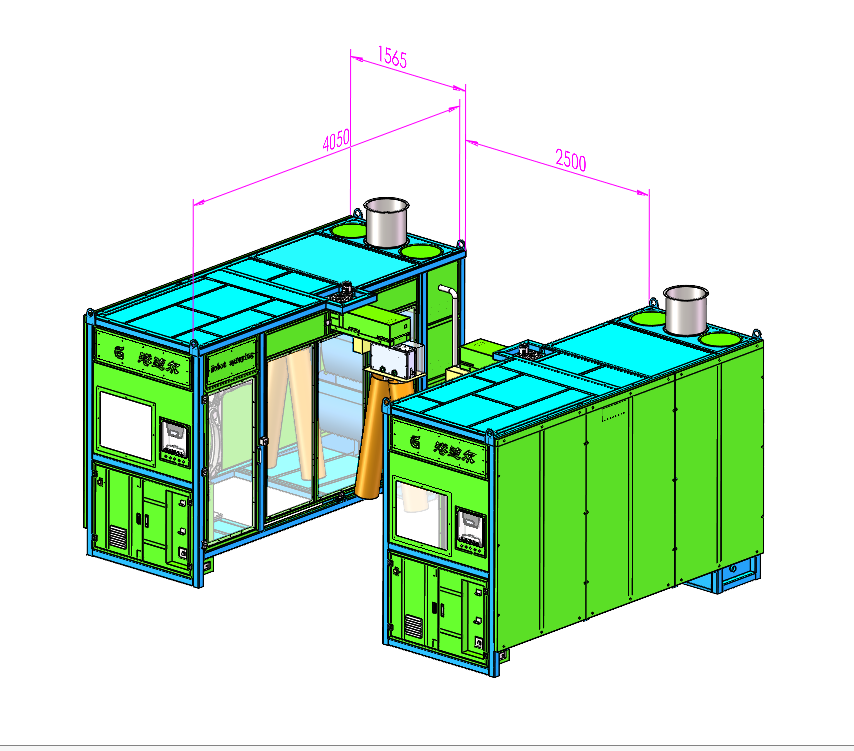
Capacity: Modern spray robots like those featured atcodefreespray.comcan handle upwards of 1,600 garments per day, significantly outperforming manual booths.

C. Compliance as a Competitive Edge

Global buyers are increasingly boycotting factories that use PP spray due to its toxic impact on workers' respiratory systems. By adopting Codefree Spray Robots, your factory instantly becomes a "Preferred Supplier" for sustainable global fashion brands.

3. Feasibility and ROI: Why Now?

In 2025, the cost of labor in India is rising while the cost of advanced sensors and PLC-controlled robotics is stabilizing.

Feature    Manual PP Spray    Codefree Spray Robot    

Worker Health    High Risk (Toxic Fumes)    Zero Risk (Closed System)    

Chemical Waste    30% - 50% Overspray    < 5% Waste    

Consistency    Variable    100% Precise    

Water Usage    High (Requires Neutralization)    Minimal to Zero    

Brand Appeal    Low (Fast Fashion)    High (Sustainable/Premium)    

4. Future-Proof Your Factory with codefreespray.com

The future of denim is "Green, Clean, and Automated." Investing in a Codefree Spray Robot is the most effective way to lower your operational costs while increasing your market share in the premium denim segment.

At codefreespray.com, we provide state-of-the-art robotic solutions specifically engineered for the unique challenges of the Indian textile landscape. Our equipment is designed for:

Durability in high-humidity environments.

Ease of Use with intuitive programming for various denim designs.

Sustainability that meets the 2025 global environmental standards.

"Automation is the only bridge between India's traditional craftsmanship and the global demand for sustainable fashion."

Ready to transform your production line?

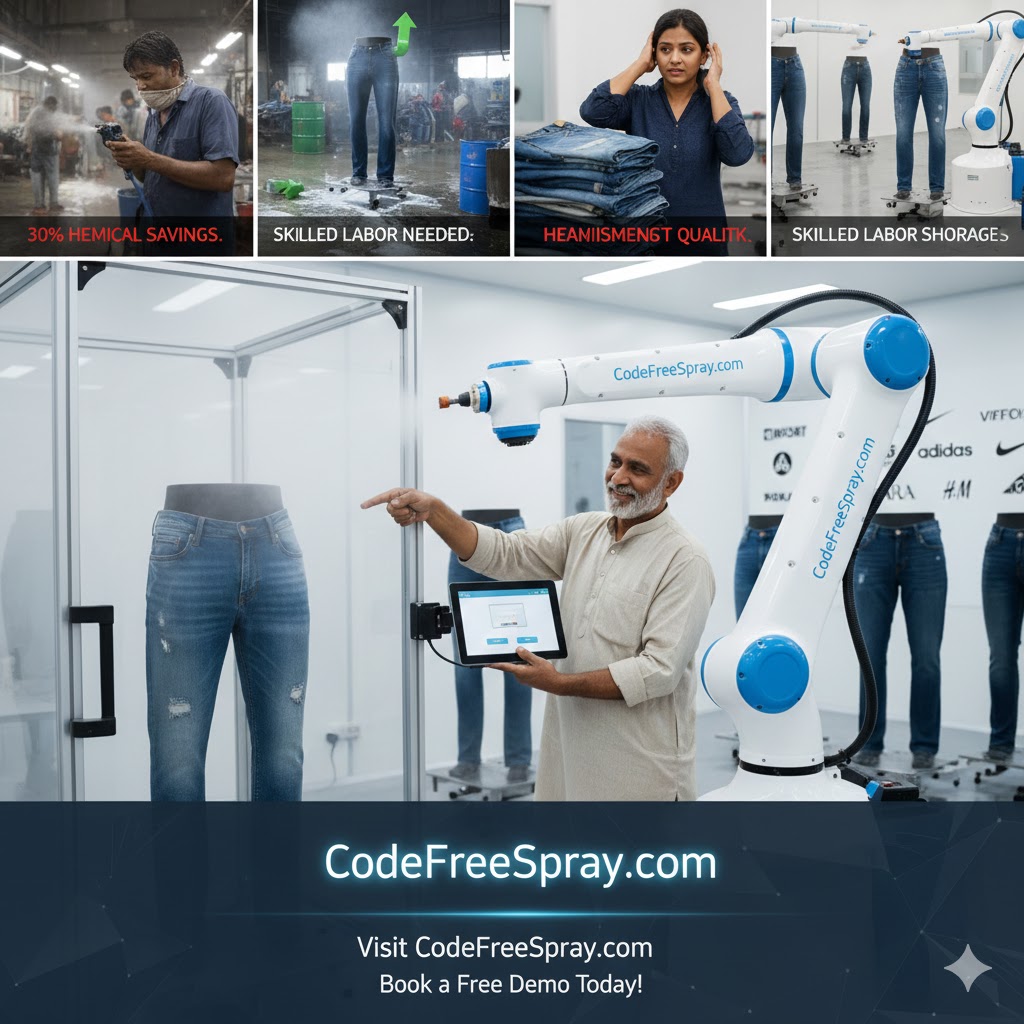
Visit codefreespray.com today to explore our catalog of robotic sprayers and schedule a technical consultation for your facility.


Description

Strategic Proposal: Scaling Indian Denim Excellence through Robotic Automation

To: The Visionary Leaders of India’s Denim Manufacturing Industry

Subject: Transitioning to Zero-Chemical Impact with Codefree Spray Robots

The Market Context: 2025 and Beyond

The Indian denim sector is no longer just a production engine; it is becoming a global leader in Sustainable Manufacturing. With international brands tightening their "Restricted Substances Lists" (RSL), the traditional use of Potassium Permanganate (PP) is becoming a liability.

Factories in Gujarat and Karnataka that fail to innovate risk losing high-value export contracts. Codefree Spray Robot technology is the solution to this existential challenge.


Why Codefree Spray Robots are the Future for India

1. Solving the "Labor-Quality Gap"

While India has a skilled workforce, manual spraying is inherently inconsistent. A Codefree Spray Robot eliminates human fatigue.

2. Radical Sustainability (The "Green" ROI)

Water scarcity in industrial zones like Delhi NCR and Erode is a major operational risk.

3. Compliance as a Sales Tool

By implementing equipment from codefreespray.com, your factory becomes an "Automatic Green Tier" supplier. This allows you to:


Technical Feasibility in the Indian Factory Environment

Our robots are engineered with the "Indian Reality" in mind:


Investment and ROI Analysis

MetricManual PP SprayCodefree Robot (codefreespray.com)
Daily Output400 - 600 pcs1,200 - 1,800 pcs
Health Insurance/RiskHigh (Respiratory issues)Zero
Chemical Cost/pcIncreasing (Regulation)Optimized (Precision Application)
Audit Success Rate60% (Subjective)100% (Systematic)


Quick Inquiry Filling Table

Industrial Equipment Specification Form

01

Product Specifications

Required for turntable spraying
02

Spraying Method

03

Hanging Line / Turntable

04

Robot Configuration

05

Electrical Cabinet

06

Spray Gun

07

Paint/Powder Supply System

08

Reference Materials

09

Water Curtain / Dust Removal Cabinet

10

Product Spraying Rhythm

11

Calibration

12

Hardware & Controls

13

Additional Requirements & Specifications